QA or the Highway Event Recap
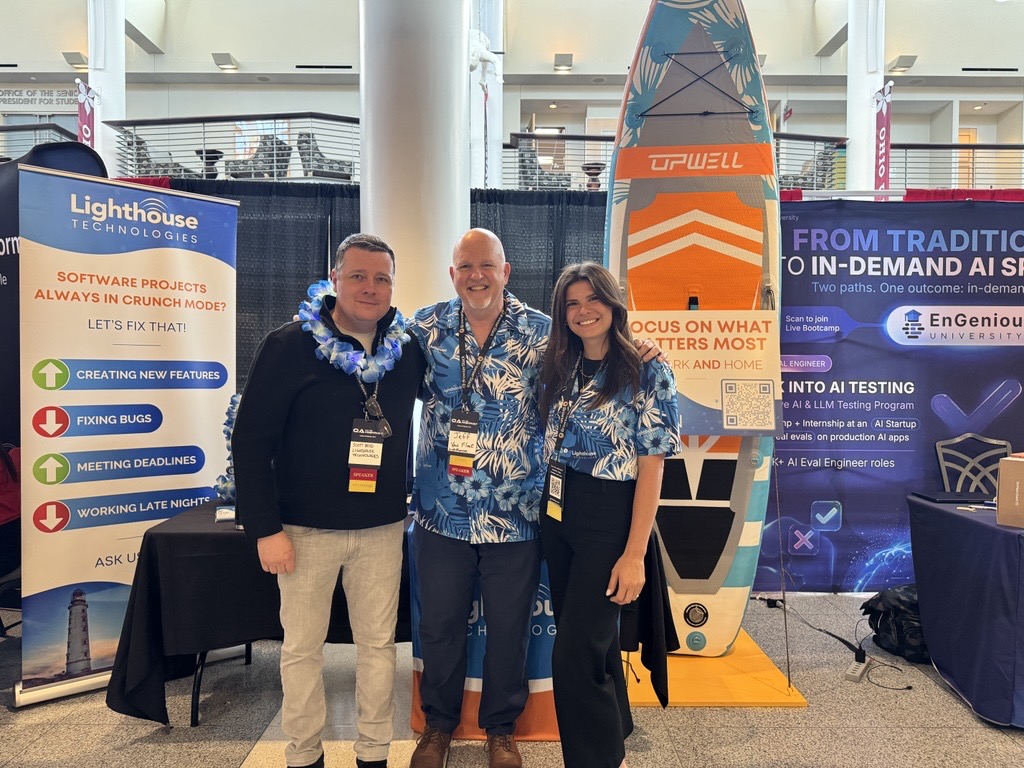
On June 12, the Lighthouse Technologies team had the opportunity to sponsor and speak at QA or the Highway, the Midwest’s largest software quality conference, in Columbus, Ohio.
As always, the event brought together an incredible community of quality engineers, software leaders, testers, developers, and technology professionals who all share a common goal: building better software.
From AI-driven development to test automation, quality culture, and engineering leadership, the conversations throughout the day reinforced one thing we see every day with our clients: software delivery is evolving rapidly, and organizations must evolve their approach to quality just as quickly.
A Huge Thank You to the QA Community
One of our favorite aspects of QA or the Highway is that it’s more than just a conference—it’s a community.
Throughout the day, we had the opportunity to connect with hundreds of attendees at the Lighthouse booth and have meaningful conversations about the challenges organizations are facing today, including:
- Balancing the speed of AI adoption with maintaining software quality
- Increasing visibility across increasingly complex delivery pipelines
- Preventing quality issues before they impact customers
- Building trust in software delivery outcomes
- Helping leaders make better decisions with objective data
It was energizing to meet so many professionals who are passionate about improving not only the technical side of software development, but also the business outcomes it supports.
Our Session: If AI Is Writing the Code, Who Is Guarding the Quality?
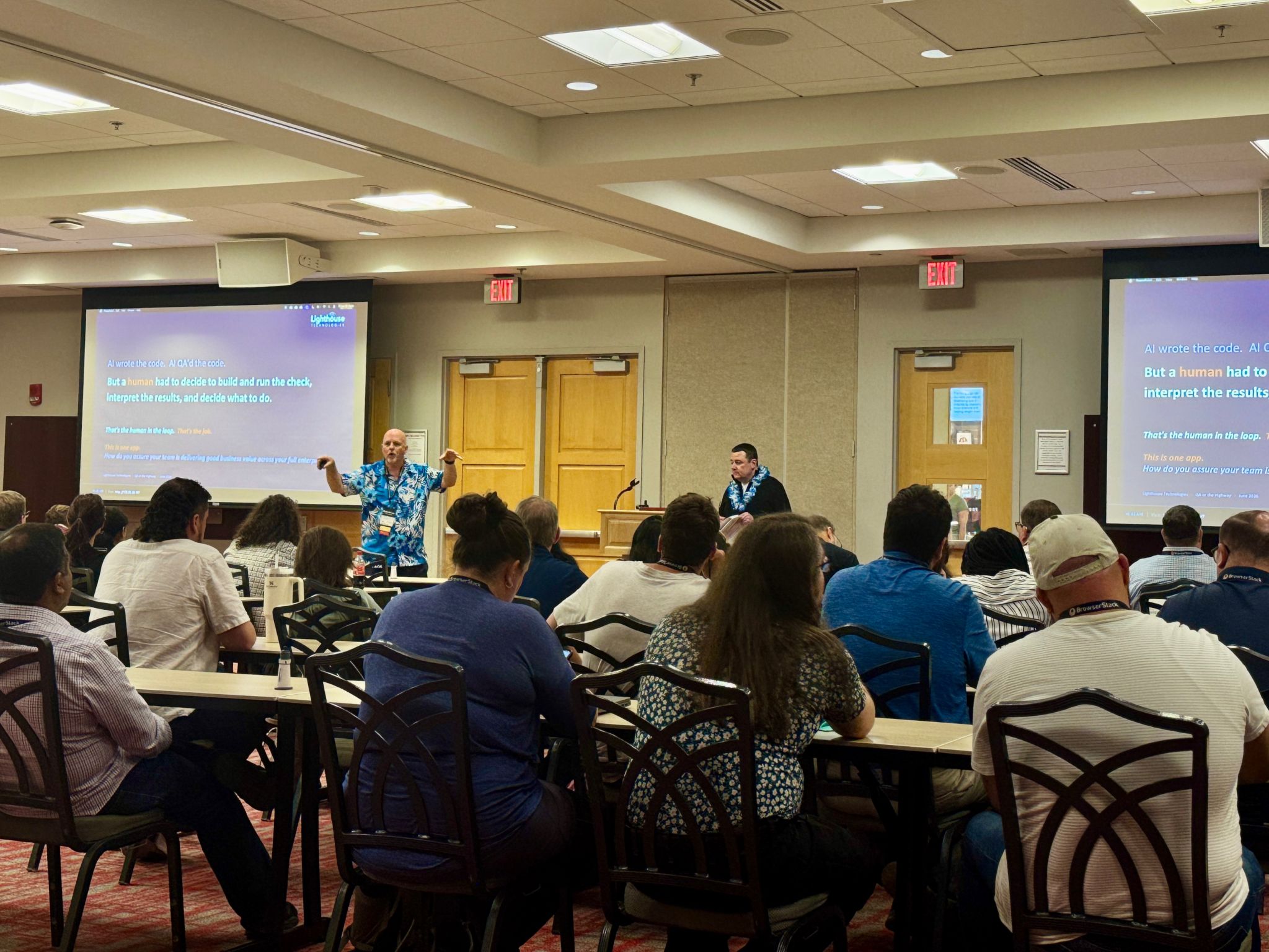
During our presentation, Lighthouse COO Scott Boyd and CEO Jeff Van Fleet explored one of the biggest questions facing organizations today: If AI is accelerating software development, how do we ensure quality doesn’t get left behind?
AI is transforming the software development lifecycle at an unprecedented pace. Teams are using AI to generate code, accelerate testing, create documentation, and streamline development workflows.
But faster delivery doesn’t automatically translate into better outcomes. In fact, without the proper guardrails in place, AI can quickly become a quality risk multiplier.
Three Key Takeaways from the Session
1. AI Introduces New Risks Across the Entire SDLC
AI isn’t simply another productivity tool. It changes how software is created. Organizations are encountering challenges such as:
- Hidden security vulnerabilities
- Inconsistent coding patterns
- Increased technical debt
- Hallucinated or inaccurate outputs
- Reduced maintainability over time
The risk isn’t AI itself—it’s adopting AI without changing the processes that support software quality.
2. Human Expertise Is More Important Than Ever
One of the biggest takeaways from the discussion was a striking statistic that really resonated with the audience: 90% of developers regularly use at least one AI tool at work (up from 85% mid-2025). Even more eye-opening? 63% of “vibe coding” users have never actually been developers. (Source: Forbes)
As the barrier to software creation drops, the risk to software quality skyrockets. When anyone can generate code with a prompt, robust QA isn’t just a safety net—it’s the ultimate differentiator.
Quality teams are no longer just responsible for finding defects. They’re responsible for:
- Verifying AI-generated outputs
- Creating effective governance processes
- Building feedback loops between AI and engineering teams
- Establishing accountability throughout the delivery process
Human oversight remains essential for ensuring software is secure, reliable, and aligned with business objectives.
3. Visibility Is the Missing Ingredient
One of the themes we continuously emphasized throughout the session was visibility.
Many organizations are moving faster than ever, yet leaders still struggle to answer fundamental questions:
- Where are the biggest risks in our delivery pipeline?
- Which teams are creating technical debt?
- Are AI tools actually improving outcomes?
- How can we identify problems before they become expensive defects?
Without objective visibility, organizations often discover issues too late—when costs, delays, and business impacts have already compounded.
Quality can no longer be an afterthought. It must become an integrated, measurable component of software delivery.
Great Conversations at the Lighthouse Booth
Outside of the presentation, our team loved connecting with attendees throughout the day at our booth.
We enjoyed discussing software quality trends, AI adoption, delivery visibility, and how organizations can proactively reduce risk while accelerating delivery.
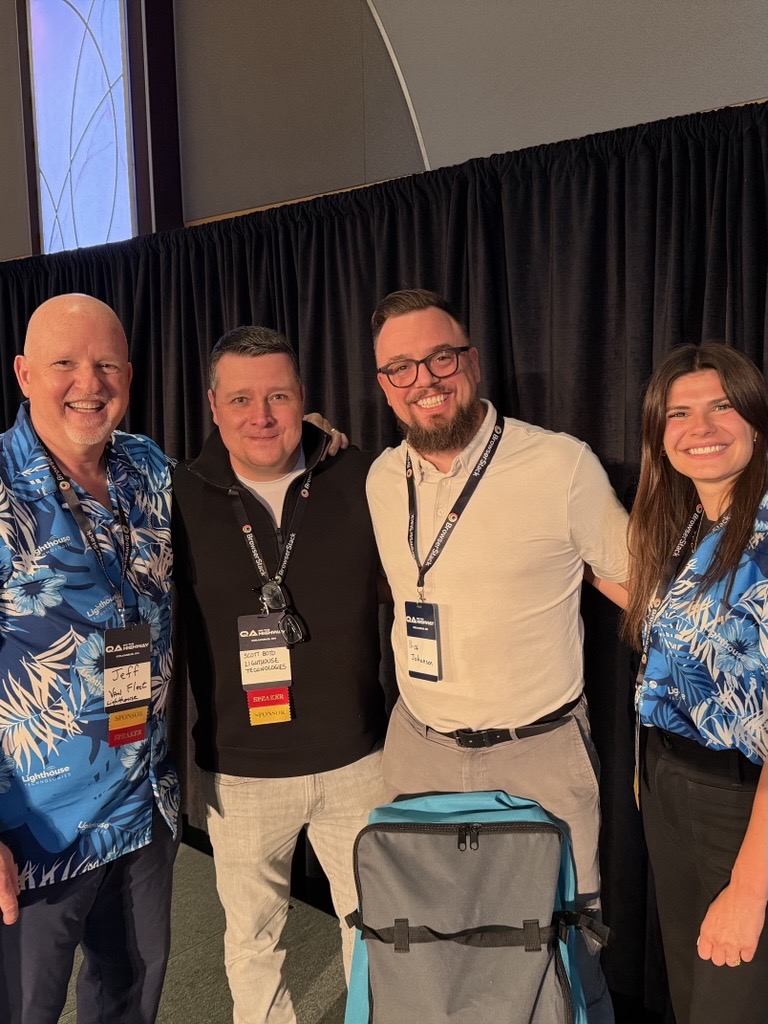
We also had some fun along the way, including our inflatable paddleboard giveaway. Congratulations again to our raffle winner, Nick Johansen. We hope it brings plenty of adventure to your summer.
The Future of Software Quality Is Changing
If there was one overarching theme from QA or the Highway this year, it’s this: AI isn’t replacing quality engineering. It’s making it more important than ever.
Organizations that succeed won’t simply adopt AI faster than everyone else. They’ll build systems that create trust, establish visibility, and maintain quality as delivery accelerates.
At Lighthouse Technologies, we’re excited to continue helping organizations navigate this shift and transform software quality from a reactive function into a strategic business advantage.
Thank You, QA or the Highway
Thank you to the organizers, speakers, attendees, and everyone who stopped by our booth and attended our session. We always leave inspired by the passion, curiosity, and collaboration that define this community.
If you want to continue the conversation and learn how Lighthouse Technologies helps organizations improve software quality, increase delivery visibility, and reduce risk across the software development lifecycle, contact us or read about Software Delivery Intelligence here.

Sarah Roberts is the Marketing Specialist at Lighthouse Technologies where she leads marketing strategies and conducts market research within the tech industry. A 2021 graduate of Miami University, Sarah brings a fresh, innovative perspective to industry trends and best practices. Her engaging and relatable blogs simplify complex topics, making them accessible and enjoyable for readers of all backgrounds.